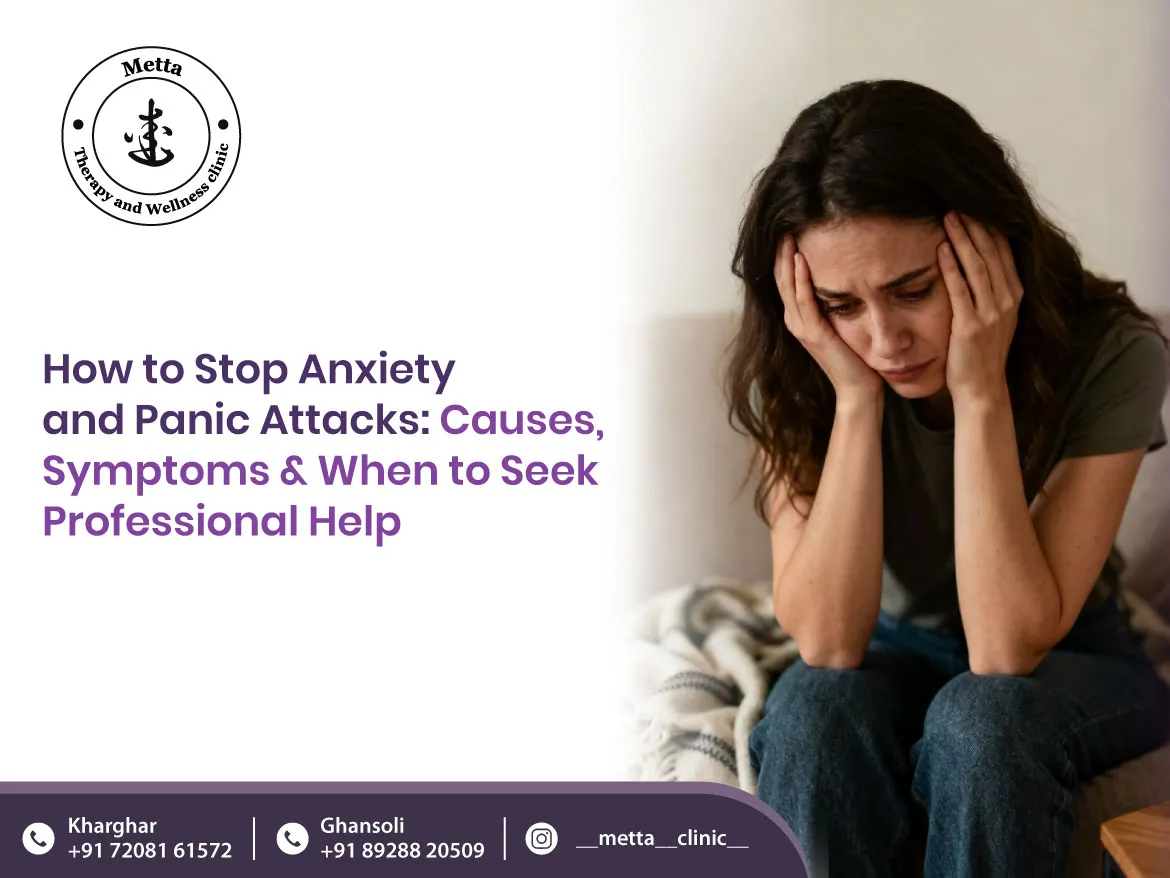
Anxiety and panic attacks can occur because of stress or a past trauma, and may include physical and psychological symptoms. Treatment becomes essential when anxiety becomes persistent or occurs with self-harming thoughts.
Anxiety and Panic Attacks: Causes, Symptoms, and When Treatment Becomes Necessary
You are doing totally fine until all of a sudden, your body starts shaking, you notice an unusual heaviness in your chest, or a feeling that something is going wrong. For those living with anxiety, they know these feelings well. These are the classic signs of a panic attack.
For some people, anxiety is all about constant “what-ifs”. For others, it turns into a full-blown panic attack, which is usually harmless but can be terrifying. Visiting a psychologist in Ghansoliis important if you have been silently dealing with anxiety or panic attacks persistently.
Causes of Anxiety
There’s no single cause, but stress is considered the biggest contributor. People who live in constant worry, whether about work, relationships, or children, are more likely to be in alert mode most of the time.
Besides, genes, brain chemistry, or traumatic past experiences (specifically a dreadful event that you couldn’t process in the moment) can all make you vulnerable to anxiety. Lifestyle factors also contribute to anxiety. For example, excessive alcohol consumption, nicotine, and recreational drugs can all heighten the risks.
Symptoms of Anxiety and Panic Attacks
Symptoms of anxiety can vary between people. Some find themselves in a constant cycle of overthinking. They feel like something bad’s about to happen, but can’t explain what. Physical symptoms can also be present. They mainly include stomach discomfort, trembling, nausea, muscle tension, headaches, dizziness, and difficulty sleeping.
A panic attack, on the other hand, starts unexpectedly, and the symptoms usually peak within 10 minutes. Here are the common signs:
- Heart pounding
- Difficulty catching a breath
- Dizziness
- Shakiness
- Sweating
- A tingling sensation in hands
- Nausea
Some also confuse these symptoms with a heart attack.
When to Seek Help?
Many people get relief with self-help strategies, such as slowing the breathing, taking something cold, smelling or tasting something strong, or talking to loved ones. However, for many, anxiety and panic attacks become so problematic that they start avoiding work, college, or social events because of the fear of another attack.
Seeking professional care becomes important when anxiety is persistent and is accompanied by self-harming thoughts, like suicide. You should also seek immediate medical attention if you experience severe chest pain that radiates to the arm and shoulder, lasts for several minutes, gets worse, or occurs with confusion, sweating, and nausea.
Treatment for Anxiety
Anxiety is treatable. With proper counselling and a psychologist’s support, you can learn to process your emotions better, challenge your thoughts, and prevent frequent episodes of panic attacks. The most effective anxiety and panic attack treatment in Ghansoliis Cognitive Behavioural Therapy (CBT).
It’s not just a form of talk therapy but a carefully planned treatment that helps you understand the connection among your thoughts, emotions, and behavior. A counsellor helps you challenge your negative thoughts and gradually learn to face situations that would typically trigger an anxiety attack.