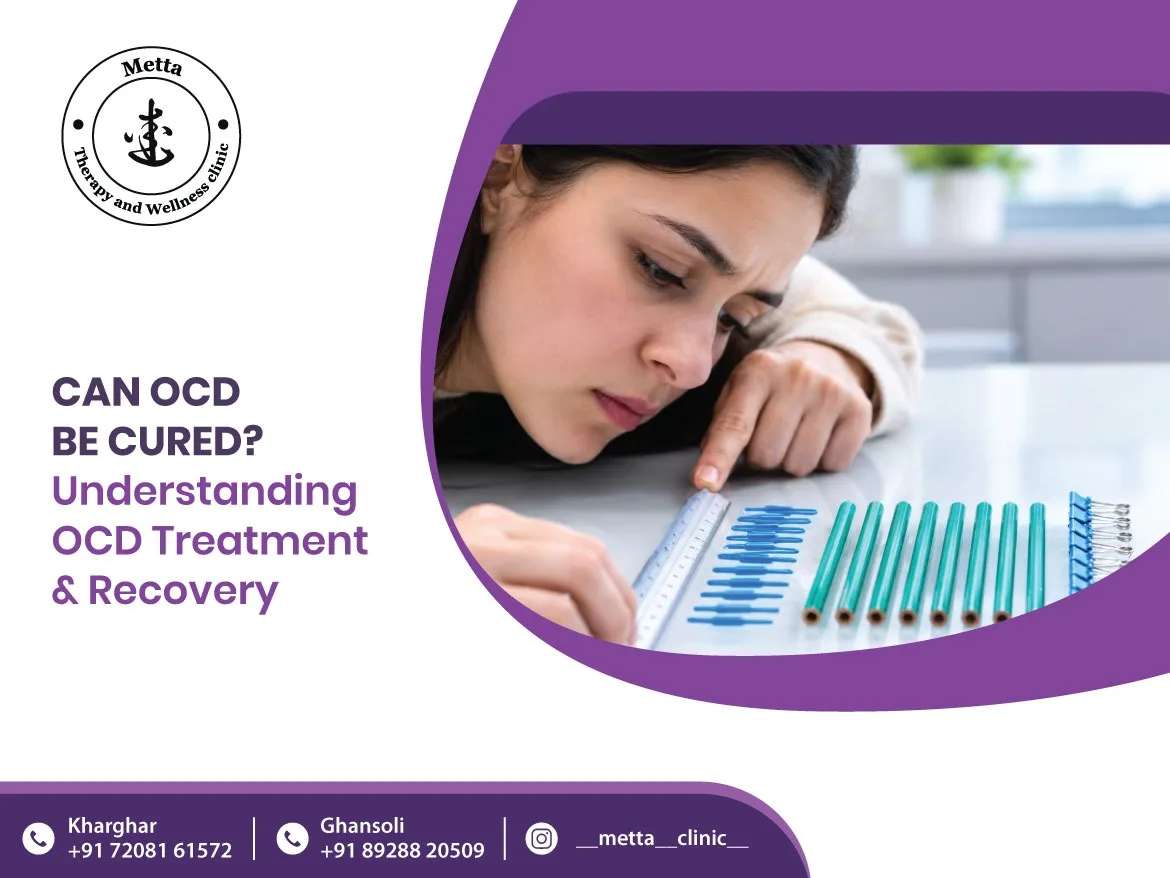
While there’s currently no permanent cure for OCD, ERP therapy can reduce the frequency and intensity of intrusive thoughts, as well as teach you how to resist acting on them.
Can OCD Be Cured? Understanding OCD Treatment & Recovery
Living with Obsessive-Compulsive Disorder (OCD) can be frustrating, both mentally and physically. The cycle of unwanted thoughts and fears can make you perform repetitive or mental rituals.
It becomes super challenging to resist the urge to act on your thoughts. This leaves people wondering if OCD treatment in Kharghar is effective enough to help them break this vicious cycle of intrusive thoughts and actions. Let’s see how it works.
Understanding OCD: What Is It?
OCD is a mental health disorder that involves obsessions, compulsions, or both.
For example, a person with OCD might wash their hands repetitively, fearing that germs are all over their hands. Or they may check door locks over and over again, worrying that someone might break in if the door isn’t properly shut.
Obsessions refer to thoughts, such as not achieving something perfectly, harming someone accidentally, or making mistakes. Compulsions mean acting on these thoughts, such as washing excessively, counting, or checking repeatedly.
Treatment for OCD
Exposure and Response Prevention (ERP), a form of Cognitive Behavioral Therapy, is a first-line treatment for OCD. The therapy involves brief exposures to the thoughts, visuals, or sensations that compel you to act a certain way, while learning how to control those urges.
You won’t be exposed to the most frightening situations, as many people assume. Instead, a clinical psychologist in Kharghar allows gradual and controlled exposure, while moving at a pace that feels comfortable to you. For example, your therapist may ask you to resist the urge to wash your hands after touching a surface or an object that you think is contaminated.
The main goal is to teach you that it’s normal to experience anxiety, without acting on your urges. Gradually, this exposure and resistance can break the OCD pattern. However, before you get there, the anxiety may seem worse since you are exposed to things that trigger your OCD. That’s why it must always be performed under a professional’s guidance.
Can OCD be Cured?
According to the National Institute of Mental Health, there currently is no cure for OCD. However, symptoms can be managed with regular therapy. Many people undergoing therapy for OCD live a normal, healthy life.
Your goal from the treatment shouldn’t be curing OCD, but reducing the intensity and frequency of compulsions. Remember, it’s not about assuming that you’ll never have another episode of intrusive thoughts or compulsions. In fact, this can become another part of your OCD.
You will learn how to control your urges around things that trigger fear or anxiety. Eventually, you will stop organizing your work and personal life around these fears.
When to Seek Professional Help
Do you find yourself obsessed with thoughts or sensations that create an urge to act on them? If this pattern starts affecting your relationships, work, or personal life, it may be time to talk to a professional therapist. Your therapist will figure out if your symptoms are relevant to OCD or if they indicate another mental health condition.


