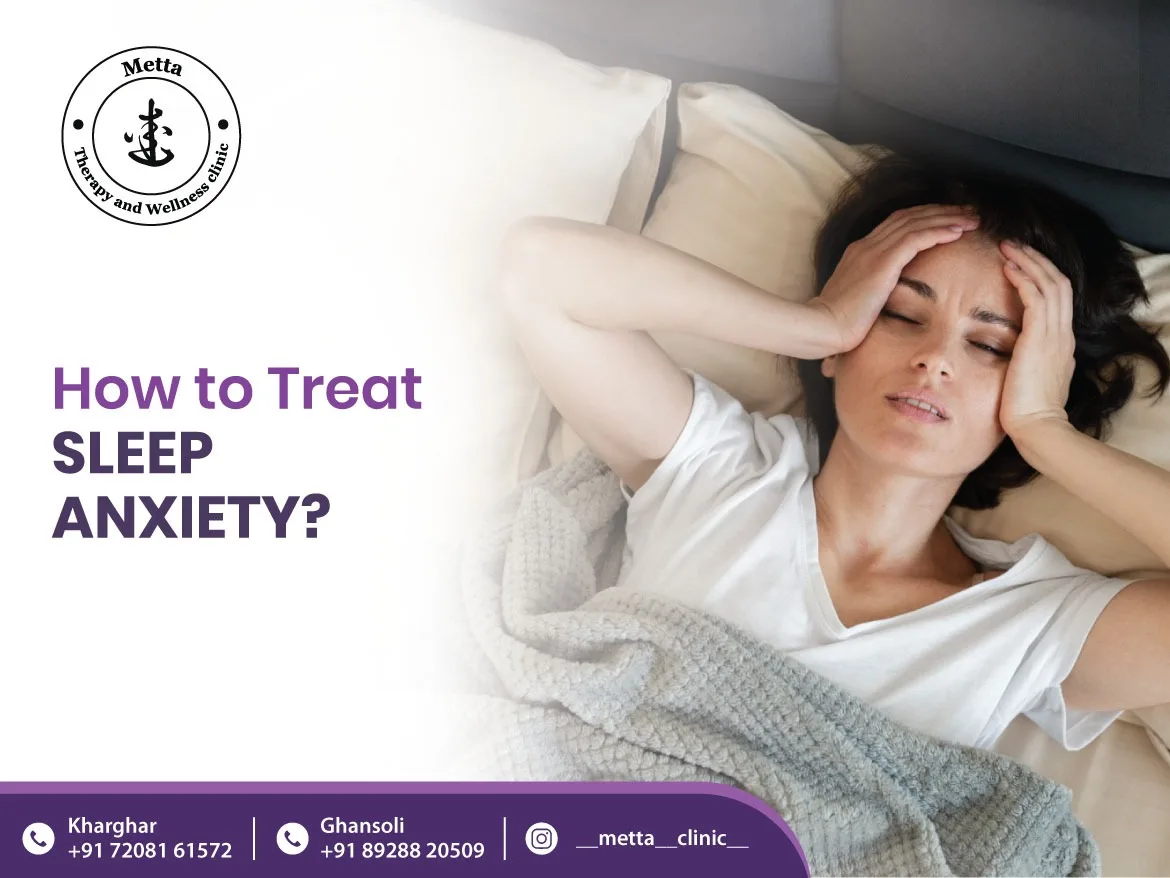
Imagine this: as soon as your head hits the pillow, you start worrying about “what if I don’t fall asleep”? Fear or excessive worry about not being able to sleep is often referred to as sleep anxiety. It’s real, and it affects many people. And if it’s persistent, it requires proper sleep anxiety treatment in Ghansoli.
Sleep is when your body calms down, gets rid of all the thoughts, and goes into repair mode. But what if the sleep that is supposed to be a part of relaxation becomes the reason for your anxiety? What if instead of drifting off to sleep, you go into an alert mode, where you can hear your heartbeat, the clock ticking, and all your thoughts?
Sleep Anxiety: The Ongoing Cycle
Sleep anxiety hits hard at night. In the daytime, your mind is often distracted with different responsibilities, such as caring for your family, office work, conversations, and routine errands. For some people, replaying the thoughts that they pushed aside during the day becomes the biggest bedtime challenge.
The unresolved conflicts, relationship issues, work stress, and other thoughts can creep in. This makes you develop sleep pressure. For people who have had many restless nights, it’s natural to feel stressed around bedtime, worrying about what if you’re unable to sleep through the night. You try harder to sleep, which can heighten your anxiety and activate alert mode. This creates a never-ending cycle.
Sleep Anxiety Treatment: What Can Help
If you want your sleep back without relying on drugs, cognitive behavioral therapy for insomnia with a psychologist in Ghansoli is an effective way to restore your normal sleep pattern.
CBT-I is a focused, evidence-based treatment that combines cognitive and behavioral strategies, including stimulus control, sleep scheduling, and techniques to address thoughts and behaviors that maintain insomnia.
The program may last for several weeks, and each week usually focuses on strengthening your beliefs about sleep and restructuring your sleep habits, so you can wind down comfortably and enjoy relaxing sleep through the night.
Changing Your Sleep Habits
The goal is to avoid activities that can put your nervous system in alert mode during bedtime and help you build a healthier relationship with sleep. Here are some additional tips that can help.
Do Not Force Yourself to Sleep: Performance pressure is real. Instead of thinking “I need to sleep at any cost”, remind yourself “I am lying in bed to relax”. Do not force yourself to sleep, as this often backfires.
Get Out of Bed: A common technique used in CBT-I is that when you feel extremely worried or frustrated, get up from bed and sit somewhere else, preferably in dim light. Read a book (a non-stimulating one), and when you feel drowsy again, go back to sleep.
Have a Consistent Wake-up Time: Compensating for a sleepless night occasionally may not be a problem, but do not oversleep regularly, as this can disturb your sleep-wake rhythm.
Use Relaxation Before Bedtime: A few minutes of breathing exercises, when you take long, deep breaths, can help reduce physical arousal. It can release muscle tension and make you calmer.


